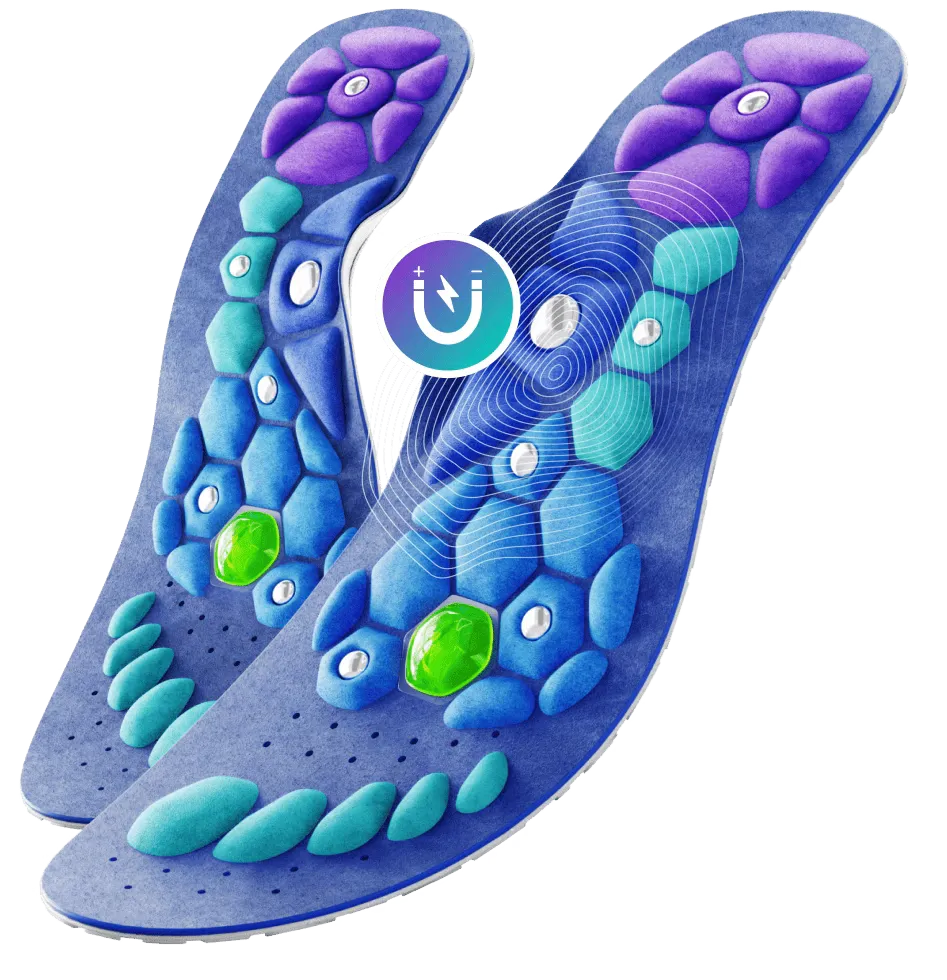
Searches for Akusoli Insoles boots usually mean one of two things, and both have short answers. Akusoli Insoles can go into most work, hiking and winter boots once you lift out the original footbed and trim the insert to its outline, but they are ordinary comfort inserts, not certified safety or occupational insoles. As for Boots, the British pharmacy chain, we found no Boots listing for Akusoli; the brand sells online.
The first half of this page is a practical boot-fitting guide: which boot styles suit a trimmed insert, how to cut it, how much room it takes up and what the raised nodes may feel like under a heavy load. The second half deals with the UK shopping question. For a general introduction to the product, start with the Akusoli Insoles overview.
Check the Current Akusoli Insoles OfferThese points come from the vendor's help center and terms, the Amazon listing titles and our own searches, all checked on October 7, 2026.
| Topic | What the record shows |
|---|---|
| Can they be cut down? | Yes. The vendor describes both sizes as trimmable with scissors for any shoe type. |
| Sizes | Two: S/M (EU 36–41.5) and L/XL (EU 42–47) |
| Materials | EVA, suede fabric and magnets, according to the help center |
| Mentions of work boots | Only in Amazon listing titles, not on the vendor's site or help center |
| Safety or occupational rating | None stated; the terms describe personal use and say the products are not designed for professional or commercial use |
| Sold at Boots UK? | We found no listing; our search of the Boots site was blocked by a bot check |
In most boots with a removable footbed, yes: the vendor says the inserts can be trimmed for "any shoe type," and a boot is simply a deeper shoe with a longer shaft.
The catch is that boots differ far more than sneakers do. A lace-up work boot, a lightweight hiker and an insulated snow boot each have a different amount of spare depth, a different footbed and a different job. The vendor publishes no boot-specific guidance, and nothing in its help center mentions hiking, waterproof or safety footwear, so the table below is our general fitting guidance rather than a manufacturer statement.
| Boot type | Typical footbed | What to check first | Likely fit |
|---|---|---|---|
| Lace-up work boot | Usually removable | Toe room once the original liner is out; how firm the floor of the boot feels | Usually workable after trimming |
| Safety-toe boot (steel or composite) | Often removable, sometimes part of the boot's design | Your employer's footwear rules and the boot maker's advice on replacement inserts | Physically possible; check rules first (see below) |
| Hiking boot | Usually removable | Heel hold on descents and toe clearance on downhill steps | Workable for shorter walks; test before a long trail |
| Insulated winter boot | Removable felt or foam liner in many models | Whether removing the liner costs you warmth, and room for thick socks | Depends on the liner; may run tight |
| Pull-on boot (Chelsea, western) | Sometimes fixed in place | Instep room, because there are no laces to loosen | Can feel snug; try before cutting |
If the boot's own footbed is glued down, adding any insert on top reduces the room inside, and that is where most fit problems start. Our full review of the product covers comfort and value more broadly; this page sticks to the footwear question.
The vendor's help center gives a four-step cutting method built around the boot's original insole, which serves as your template.
These general fitting habits are our suggestions, not part of the vendor's instructions, and they matter more in a boot than in a low shoe.
Think about returns before you cut: the vendor's return page mentions change-of-mind returns for products that are opened but unused, and a trimmed insert may no longer count as unused. Try the uncut pair on top of the boot's footbed, or check the length against it, before you pick up the scissors.
Should the boot's original insole stay in underneath? Normally no. The trimming method for Akusoli Insoles starts by removing the existing insole, and stacking two layers in a boot eats up toe and instep room. Keep the original only as your cutting template or spare.
That depends on how thick the boot's original liner is compared with the new insert, and the vendor does not publish a thickness figure for Akusoli Insoles.
Boot makers size their footwear around a particular footbed and, in many outdoor and winter models, a thicker sock. Swap the footbed and you change the internal volume. If the Akusoli insert is thinner than what came out, you gain a little space; if it is thicker, or if its raised nodes add height under the forefoot, the toes and instep get less. Because no thickness measurement is published, the only reliable test is your own boot.
Run through this short checklist wearing the socks you would actually use with the boot.
If space is tight, a thinner sock is often an easier fix than a different boot. If it is still tight, the insert probably suits a roomier pair of shoes better. Our sizing notes for men with larger feet explain how the two Akusoli sizes map onto US shoe sizes.
You can physically fit them, but Akusoli Insoles are not sold as safety, protective or occupational insoles, and the vendor's terms describe the products as being for personal use.
According to the vendor's terms, the products are "not designed" for professional or commercial use. We found no statement about steel-toe, composite-toe, electrical-hazard or puncture-resistant footwear anywhere in the help center. That matters because protective boots are a workplace safety item, and some employers or boot makers have rules about which footbeds may be used inside them.
A few questions settle whether a swap is sensible for your situation.
For ordinary non-safety work boots, the decision is simply about comfort and fit, and the earlier sections apply.
Expect the textured surface to feel firmer the longer and harder you load it; some buyers like that massaging sensation, while others describe it as uncomfortable.
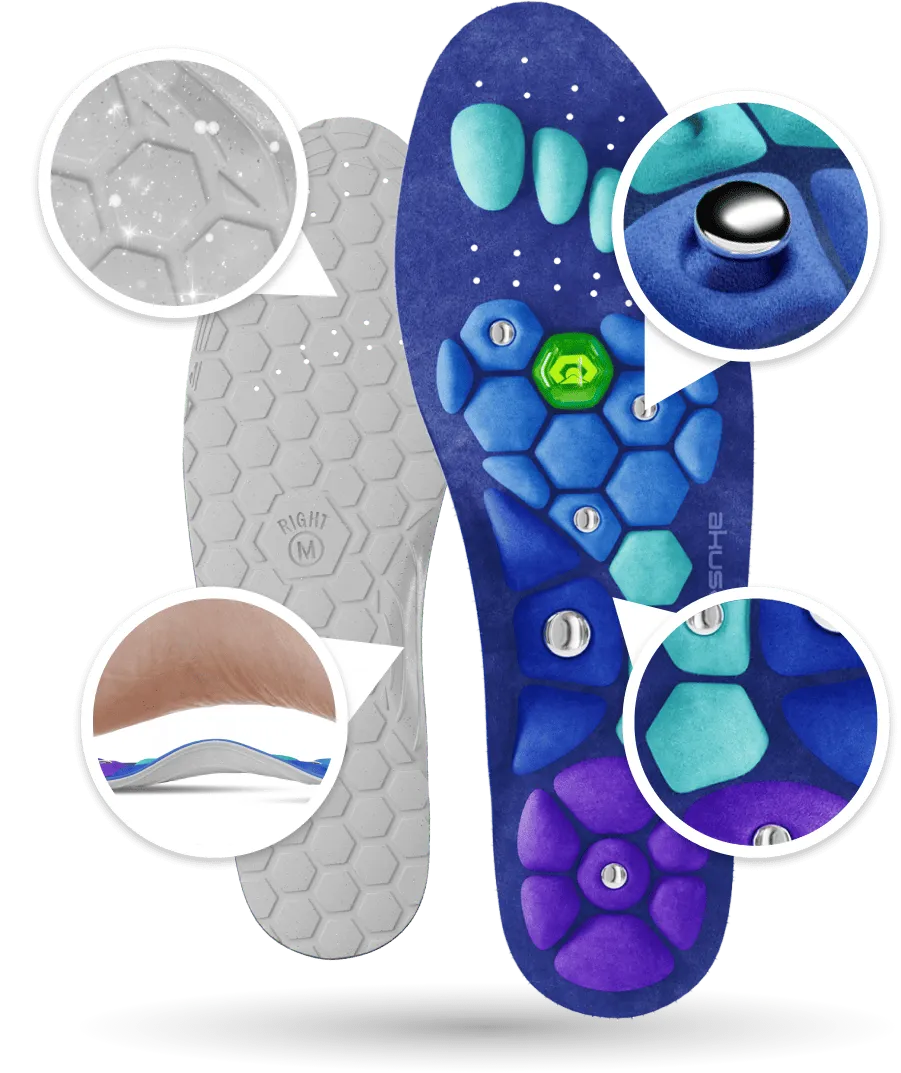
Akusoli inserts carry raised acupressure nodes and small magnet studs on top of an EVA base. In a light shoe on a short walk, those bumps press gently. Inside a boot, three things change: you may be carrying tools or a pack, you may stay on your feet for eight hours or more, and on a trail your weight shifts sharply onto the forefoot going downhill. All three increase the pressure on each node.
Complaints posted on the brand's main Trustpilot profile include a "walking on pebbles" feeling, pain or corns, and magnets that came off within about two weeks. Those are individual reports, not test results, but they are worth weighing if you plan heavy use. Fans of the product mention comfort and an easier day on their feet. The overview of where buyer reviews are posted lays out both sides with their sources.
Build up gradually rather than debuting a new insert on a full shift or a long trail.
Will the magnets make a difference inside a boot? There is no good evidence they will. Clinical trials summarised by the AAFP found magnetic insoles performed no better than look-alike non-magnetic ones, so any comfort Akusoli Insoles provide in a boot most likely comes from the cushioning and arch shape.
The phrase "work boots" appears in the titles of two Akusoli listings on Amazon.com but not on the vendor's own site, so it reads as search-friendly listing copy rather than a product specification.
One listing, ASIN B0DHCP54R7, is titled for "Men & Women" with "Flat Feet & Men Work Boots" and the L/XL size range; it showed as currently unavailable when we checked. Another, ASIN B0F2F64DCN, is titled "Akusoli Insoles for Men, Work Boots Mens Insoles," but its details did not load for us. Neither title comes with a description of testing in boots. The vendor's help center, by contrast, talks about people who are on their feet for long periods and never names boots at all.
Amazon materials fields also differ from the vendor's description. One listing names foam, spandex, EVA, magnets and gel, while the help center names EVA, suede fabric and magnets. We could not confirm whether the Amazon product is identical to the one sold through the vendor's store. Our guide to the Akusoli Amazon storefront looks at those listings and the look-alike magnetic insoles sold nearby.
We found no Boots listing for Akusoli Insoles: a search restricted to the Boots website returned no results, although we cannot rule out a change after October 7, 2026.
We also tried the search on boots.com directly, but it returned a bot-check page, so we could not browse the chemist's catalogue ourselves. That is why we describe the result as "no listing found" rather than a definite "not sold." Wider searches turned up no high-street stockist of any kind, in the UK or in the United States, and no Walmart, CVS or Walgreens listing either. Everything we could confirm points to an online-only brand.
Two routes are confirmed, and both deliver to the door rather than to a shop.
| Route | What we confirmed | Points to note |
|---|---|---|
| The vendor's web store | Ships internationally and lists a UK support line, +44 208 089 1401 | Orders are sent from China; the terms quote 1–3 business days of processing and 4–14 business days of delivery, and import taxes may apply |
| Akusoli store on Amazon.co.uk | A listing showing "Visit the Akusoli Store" | Amazon's own return rules apply rather than the vendor's policy; the price and seller did not load for us |
| Physical shops, Boots included | No listing or stockist found | Treat any in-store claim with caution until you see it yourself |
If being able to pick up and feel an insole before paying matters to you, a chemist or shoe shop insert is a different product with a different approach, but it does let you compare in person. For Akusoli specifically, the guide for British buyers covers delivery, VAT and UK cancellation rights, and our list of confirmed places to order sets out every genuine channel we could verify.
A two-minute check of your boots, your size and the seller's terms prevents most disappointments.
Trim to your boot's own footbed • Return conditions are set by the vendor
Yes, as long as the hiking boot has a footbed you can lift out to use as a template. Akusoli Insoles are designed to be trimmed with scissors, and the vendor's method is to line the old footbed up with the new insert at the heel, trace around it and cut. Test the trimmed pair on short walks before relying on it for a long trail, especially on steep descents where the forefoot takes more weight.
In most cases, yes. The trimming instructions for Akusoli Insoles begin with removing the existing insole, which then doubles as the cutting pattern. Leaving it underneath stacks two layers in the boot and usually squeezes the toes and instep. Hang on to the original, though, because you may want to switch back for a particular season or activity.
We found no safety approval or occupational rating of any kind. Akusoli Insoles are comfort inserts, and the vendor's terms say its products are meant for personal use and are not designed for professional or commercial use. If your protective boots are issued or specified by an employer, ask the safety lead or check the boot maker's guidance before you replace the footbed.
They might, depending on what they replace. Insulated boots are often sized for a thick liner and a heavy sock, and the vendor publishes no thickness figure for Akusoli Insoles, so the change in room is impossible to predict on paper. Try the insert with your warmest socks on; if your toes cannot move freely, switch to a thinner sock or keep the insert for roomier shoes.
We found no Boots listing for Akusoli Insoles as of October 7, 2026. A web search limited to the Boots website returned nothing, and a direct search on the retailer's site was blocked by a bot check, so we cannot say with complete certainty that they are never stocked. Every channel we could confirm was online: the vendor's web store and the Akusoli store on Amazon.
Not that we could find. Akusoli Insoles appear to be sold only online, so there is no shop shelf where you can handle a pair first. The closest substitute is the return window: the vendor states 60 days from receipt with conditions, and a trimmed insert may not count as unused, so check the length against your shoe before cutting.
Only if the two pairs of footwear have a very similar footbed shape. Once Akusoli Insoles have been cut to match one boot's outline, they tend to sit loosely in a longer shoe or buckle in a narrower one. Most people find it simpler to dedicate a pair to the footwear they wear most, such as their work boots.
Every source below was consulted on October 7, 2026. The seller's help-center articles on trimming, sizing and materials, its terms of service and its return page are summarised in plain text, as we deliberately avoid linking to any of the seller's pages. Amazon listings are named by ASIN without links for the same reason.
Researched by: Akusoli Insoles Editorial Team
This guide was compiled by the Akusoli Insoles Editorial Team from the vendor's own trimming, sizing and materials articles, Amazon listing details, published buyer feedback and independent medical sources. We did not wear-test the insoles in any boots, and the boot-type notes are general fitting guidance rather than manufacturer advice. If you work in protective footwear, your employer's rules come first. This independent site may earn a commission when readers buy through its links, at no extra cost to them. Last reviewed October 7, 2026.